You submitted your documents, paid the fees, and now the waiting starts. At that point, one question becomes very real: can travel agency track visa application status for you, or are you still left refreshing government portals on your own? The short answer is yes, in many cases a travel agency can track a visa application, but the level of access depends on the country, the visa system, and whether the agency submitted the application directly.
That distinction matters. Some travelers assume an agency can see every stage of a visa file in real time. Others think an agency has no visibility at all once documents are sent. The truth sits in the middle. A good agency can often monitor progress, follow up through the right channels, and keep you informed, but it does not control the immigration authority’s final decision.
Can travel agency track visa application in real time?
Sometimes yes, sometimes no. If the visa process includes an online tracking portal and the agency filed the application on your behalf, the agency can usually check the same status updates available through that system. In some cases, agencies also receive submission confirmations, appointment details, document alerts, and status changes through their processing network or authorized channel.
But real-time tracking is not universal. Some embassies and immigration departments provide only basic updates such as received, under process, approved, or dispatched. Others share very little until a final outcome is issued. That means even the most experienced agency can only report what the system actually shows.
This is where travelers need clear expectations. Tracking is useful, but it is not the same as influence. An agency can monitor movement, flag missing documents, and help you respond quickly. It cannot speed up a government review simply by checking status more often.
What a travel agency can usually track
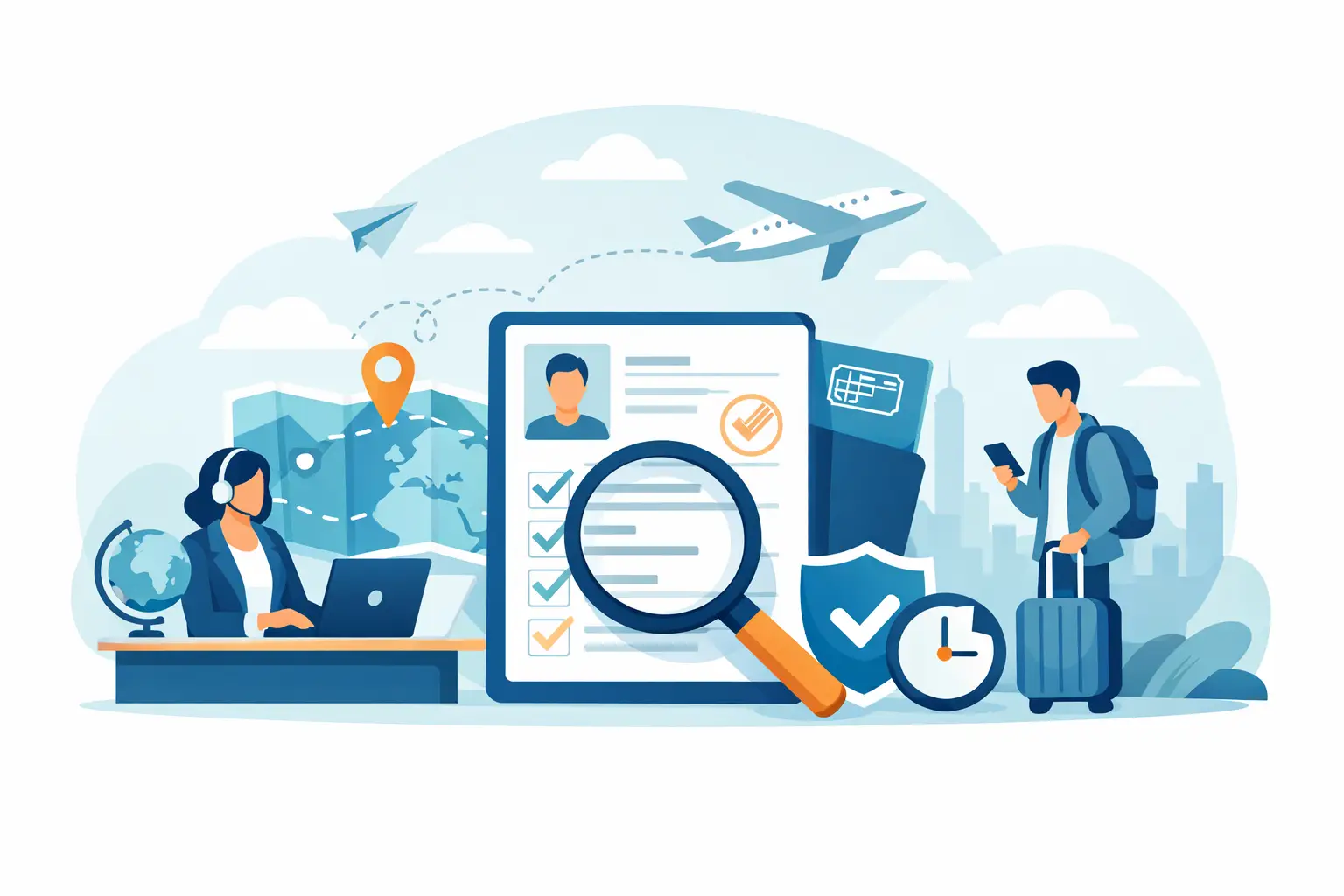
When a visa application is submitted through an agency, the agency can often track operational milestones tied to the file. That typically includes whether the application was submitted successfully, whether biometrics or appointments were completed, whether additional documents were requested, and whether the passport or decision is ready for collection or dispatch.
For travelers, this support removes a lot of guesswork. Instead of trying to interpret vague status messages, you have someone who understands what each stage usually means. If the application is sitting in review longer than expected, the agency can tell you whether that is normal for that destination or whether follow-up makes sense.
This is especially helpful for urgent trips, family travel, and first-time applicants. A tracking update by itself is just a status line. Guidance around that update is what reduces stress.
What a travel agency cannot track
Agencies do not get unrestricted access to immigration systems. They usually cannot see internal review notes, reasons for every delay, security checks, or the exact date a decision will be made. If an embassy is conducting background verification or reviewing supporting documents in detail, that process may remain invisible until the authority releases an update.
Agencies also cannot guarantee approval. A strong application, correct documentation, and careful submission improve the chances of a smooth process, but the final decision always belongs to the issuing authority.
That is why experienced visa support matters most before and during submission, not just after. Good tracking is valuable, but good preparation is what prevents many delays in the first place.
Why agency tracking still helps even with limited visibility
Some travelers hear that agencies cannot see everything and assume tracking support has little value. In practice, it helps more than people think.
The biggest advantage is speed of response. If a document issue appears, an agency can often catch it early and tell you exactly what needs to be fixed. If an appointment is required, they can guide the next step. If the status changes to approved or dispatched, you know what happens next without having to decode the system yourself.
The second advantage is accuracy. Visa platforms are not always built for ease of use, and status wording can be unclear. A guided service helps you avoid misreading a normal delay as a problem, or worse, missing a genuine request that needs immediate action.
The third advantage is accountability. When one team manages documents, submission, and follow-up, there is less room for confusion between what you sent, what was filed, and what still needs attention.
When the answer depends on the destination
If you are asking can travel agency track visa application progress, the destination matters a lot. Different countries use different processing models.
Some destinations have structured electronic systems with reference numbers and public tracking tools. Others route applications through visa centers that provide limited milestone updates. In a few cases, communication comes mainly by email or SMS, which means the agency tracks the application through submission records and official notifications rather than a live dashboard.
Processing style also varies by visa type. Tourist visas are often easier to track than residency, work, or long-stay categories because the workflow is more standardized. If your file involves sponsor verification, employer checks, or additional approvals, status visibility may be less detailed.
For travelers heading to destinations with strict documentation rules or variable timelines, it helps to work with an agency that explains what can actually be tracked before you apply. That level of transparency saves frustration later.
How to know if your agency can really track your application
Ask practical questions, not general ones. A reliable agency should be able to tell you how updates are received, what stages are normally visible, and how they will communicate status changes to you.
For example, do they provide tracking through a reference number, direct update messages, or manual follow-up from their team? Will they notify you only at major stages, or whenever the status changes? If extra documents are requested, how quickly will they contact you? Clear answers here are a strong sign that the process is organized.
Be careful with agencies that promise guaranteed approvals or claim they can “push” embassy decisions. That is not how legitimate visa processing works. Trustworthy support sounds different. It focuses on complete documentation, correct submission, realistic timelines, and timely follow-up.
The difference between self-tracking and agency-assisted tracking
You can often track an application yourself if you have the reference number and access to the right portal. So why use an agency at all?
Because tracking is only one piece of the process. Self-tracking tells you where the file is. Agency-assisted tracking tells you what that status means and what to do next. If the portal says under process, an experienced team can tell you whether that timeline is normal. If the system asks for more documents, they can help you prepare the right response quickly and correctly.
That difference is especially valuable when travel dates are fixed. If you have flights, hotel plans, family events, or business commitments tied to the trip, delays become more than an inconvenience. They affect the entire travel plan.
For travelers who want both visa handling and trip support in one place, working with a managed service can make the whole process easier. A company like Trawego, for example, does more than file paperwork. The value comes from guided submission, secure document handling, clear timelines, and status tracking paired with real human support.
What you should do while your visa is being tracked
Once the application is submitted, stay reachable and keep your documents ready. If the agency contacts you for clarification, a revised file, or an additional document, respond quickly. Small delays on the applicant side can turn into bigger timing problems later.
It is also smart not to make nonrefundable travel commitments too early unless your destination and visa type allow for predictable approval timing. Even when tracking is available, visa processing can shift because of volume, holidays, checks, or embassy workload.
Most of all, keep expectations realistic. Tracking gives visibility. It does not remove every uncertainty. What it does do is give you a better chance to stay informed, act fast, and avoid preventable mistakes.
If you are planning a trip soon, the better question is not only whether an agency can track your visa application. It is whether the agency can guide the full process with enough clarity that you feel confident while you wait.