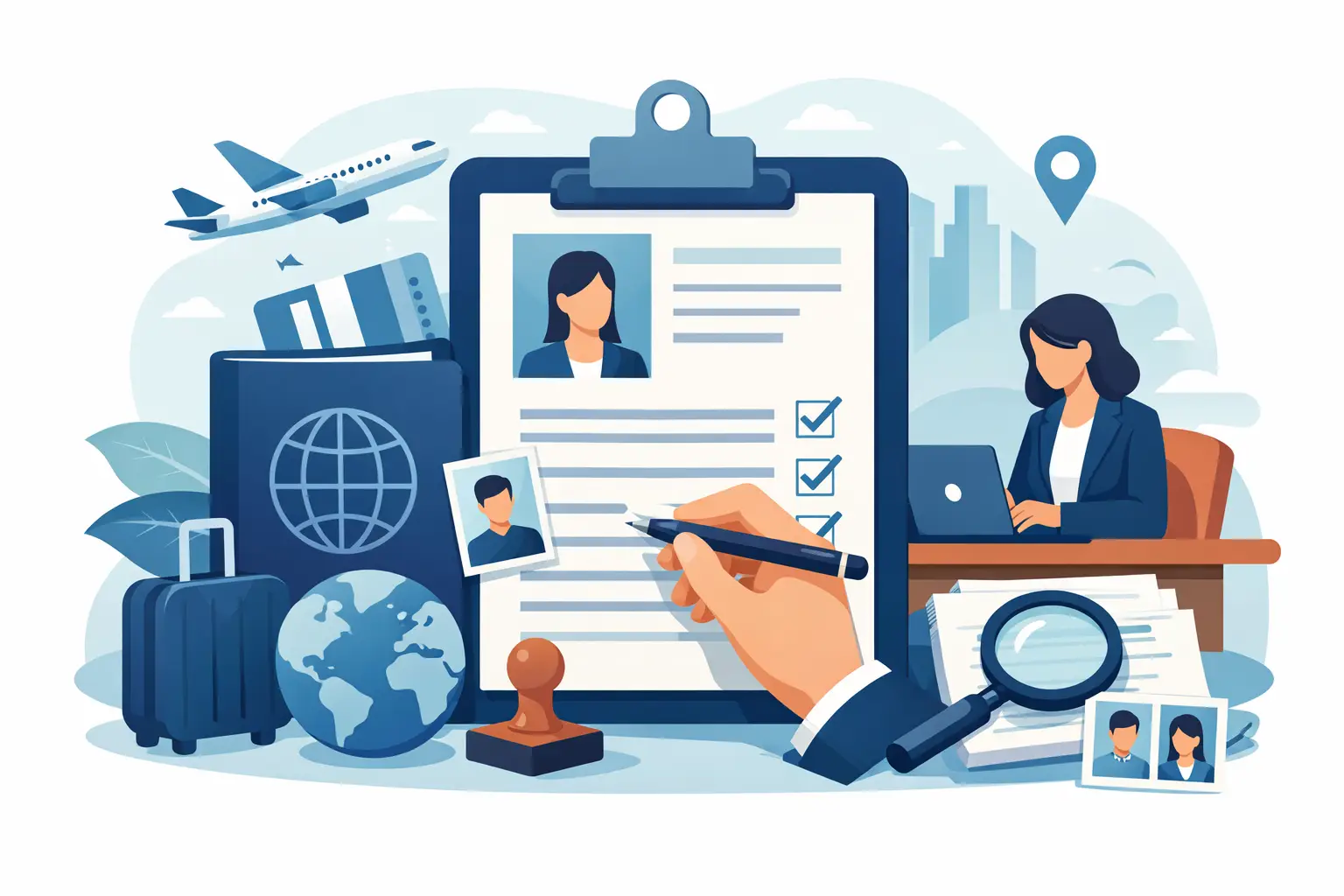
A visa refusal often starts long before the embassy reviews your application. It starts with a blurry passport scan, a bank statement that does not match the sponsor details, or a missing hotel confirmation. If you are wondering how to prepare visa documents correctly, the goal is not just to collect papers. The goal is to present a complete, consistent application that gives immigration officers clear reasons to approve your trip.
Why document accuracy matters more than people think
Most travelers focus on the form itself, but supporting documents usually carry the real weight. Your passport, photos, financial proof, travel plan, and supporting letters must all tell the same story. If one document says you are traveling for tourism, another shows no accommodation, and a third has dates that do not line up, that creates doubt.
Visa teams are trained to look for gaps, inconsistencies, and risk signals. That does not mean every small mistake leads to rejection, but errors can delay processing, trigger extra document requests, or reduce your chances of approval. For time-sensitive travel, even a simple mismatch can become expensive.
How to prepare visa documents correctly from the start
Start with the destination’s exact visa requirements, not assumptions from a previous trip or another country’s process. Tourist visa rules vary by nationality, destination, type of stay, and who is funding the trip. A UAE resident applying for a short holiday visa may need a different set of documents than an Indian national applying directly from India.
Before you upload or print anything, confirm four basics: the visa type, the validity rules for your passport, the required financial documents, and whether bookings must be confirmed or only proposed. This is where many applicants make avoidable mistakes. They prepare a strong file for the wrong category.
Match every document to the purpose of travel
Your application should read like one clear plan. If you are visiting for tourism, your documents should support leisure travel. That usually means a passport copy, recent photo, travel dates, hotel booking, return ticket or onward journey, and proof that you can pay for the trip.
If someone else is sponsoring you, then the application must show that relationship clearly. A sponsorship letter alone is rarely enough. You may also need the sponsor’s bank statements, ID or residence proof, and documents showing the relationship, such as a marriage certificate or birth certificate. Missing that connection is a common reason files are marked incomplete.
Use recent and readable documents
Freshness matters. Many embassies and visa centers expect recent bank statements, recent photographs, and current employment letters. Submitting documents issued months ago can weaken the file, even if the information is technically still true.
Readability matters just as much. If a passport scan is cut off, if the statement is too dark, or if the PDF opens sideways, your case becomes harder to review. Immigration officers do not correct your formatting for you. They simply assess what they can see.
The core documents that need the closest attention
Your passport should usually be valid for at least six months beyond travel, unless the destination sets a different rule. Check that there are enough blank pages where required and that the bio page is scanned in full color with all edges visible. If you have old passports with previous visas or travel history, they may help in some cases, especially when travel credibility matters.
Your visa photo must meet exact specifications. This is not the place to reuse a casual photo from your phone. Background color, face position, expression, dimensions, and recency can all matter. Different countries reject photos for surprisingly small reasons.
Financial documents are another major review point. A bank statement should show stable funds, your name, and account details clearly. Large sudden deposits can raise questions unless they are explained. If your trip is sponsored, the source of funds should be easy to understand. A strong statement is not only about the balance. It is also about consistency.
Employment proof, if required, should match the rest of the application. Your job title, salary, leave approval, and employer details should be current and verifiable. Self-employed travelers may need business registration papers, tax records, or company bank statements instead. Students and retirees often need alternate proof of ties and financial support.
Travel bookings must also be consistent. Flight dates, hotel reservations, and the intended duration of stay should align with the application form. If your hotel booking covers four nights but the form says seven, that invites questions. The same applies if you submit a return ticket for a date outside your declared travel period.
Common mistakes that delay or weaken a visa application
The biggest mistake is inconsistency. Even honest travelers get refused because one part of the file does not support another. Names with different spellings, passports with old signatures, sponsor details that do not match the bank statement, and employment letters without contact information are all avoidable problems.
Another issue is over-submitting irrelevant documents. More paperwork does not always mean a stronger application. It can create confusion if unnecessary documents introduce different addresses, old employment details, or outdated financial records. Include what is required and what genuinely strengthens the case.
Translation and language issues also matter. If a destination requires documents in English or the local official language, uncertified or partial translations may not be accepted. This depends on the country, so check the rule before submitting anything translated informally.
Timing is another trade-off. Applying too late creates pressure and leaves no room to fix errors. Applying too early can also be a problem for documents that must be recent, such as salary slips, bank statements, or employer letters. The right preparation window depends on the destination’s processing time and the document validity rules.
A simple review process before you submit
The safest way to prepare is to review your application as if you were the officer seeing it for the first time. Ask whether your identity is clear, your travel purpose is obvious, your funding is believable, and your return plan makes sense. If the answer is not immediately yes, the file may need work.
Create one final checklist using the destination’s requirements. Then compare every document against four points: is it correct, current, complete, and consistent? This quick review catches most preventable mistakes.
Check names, dates, and document quality
Your name should appear the same way across your passport, application form, bank documents, hotel booking, and sponsor papers. Dates should also line up across flights, accommodation, leave letters, and invitation documents.
Then review file quality. Make sure scans are clear, PDFs open properly, and no page is missing. It sounds basic, but these are some of the most common issues in visa submissions.
Prepare for destination-specific requests
Some countries ask for travel insurance, invitation letters, tenancy documents, or proof of residence in your current country. Others care more about return ties, such as employment, family responsibility, or previous travel history. There is no one-size-fits-all visa file.
That is why guided support can save time, especially if your case includes a sponsor, urgent travel, mixed-purpose travel, or multiple travelers in one application. A managed review helps spot problems before they become refusals.
When professional support makes sense
If this is your first visa, if you have had a previous refusal, or if you are traveling on a tight deadline, expert support is often worth it. The value is not just form filling. It is document matching, requirement checks, error prevention, and knowing what to do when a case is not straightforward.
For travelers who want faster, clearer execution, agencies like Trawego help organize the process from document review to status tracking. That kind of support is especially useful when you are planning flights, hotels, and visa paperwork at the same time and cannot afford avoidable delays.
A well-prepared visa application does not look complicated. It looks clean, consistent, and easy to trust. If you slow down long enough to make every document support the same travel story, you give your application the best possible chance before it even reaches the review desk.